
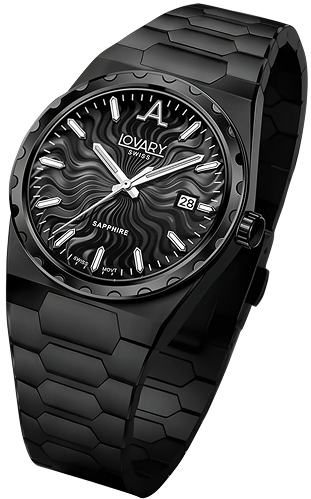
About Lovary
Lovary est. 1951
Founded by Fallot and Robert-Charrue, Lovary was an exceptional company renowned for its expertise in the manufacture of watch movements. It was one of the best addresses in Switzerland for high-precision and miniaturised movements. They also invented and successfully marketed the jumping second, known as “Saltofix”.
Brand Overview
A Swiss heritage brand since 1951, Lovary represents decades of watchmaking excellence rooted in Le Locle, one of Switzerland's most prestigious watchmaking towns.
1951
Swiss heritage brand since 1951 ( 75 years @ 2026 ). founded by by Fallot and Robert-Charrue expertise in the manufacture of watch movements.
Le Locle
Start from “ Le Locle “ ( one of the most watchmaking towns in Switzerland )
Saltofix Innovation
Innovation : Saltofix 1st reliable jumping second movement Used by Omega , Rolex Popular with doctors , engineers , pilots
Global Recognition
Licensed patent to Top brand : Audemars Piguet, Zenith, Patek Philipp
Grand Cherry Oo
Exclusive Distributor of Lovary begin in 2026.
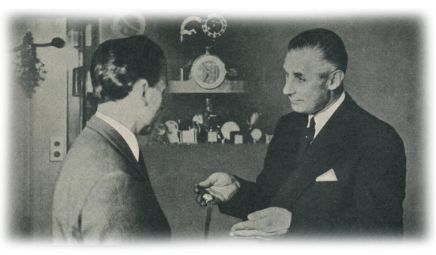
Historical context of the watchmaking industry
The thinnest hand-wound wristwatch ever made with the introduction of the 1.64 mm calibre, used in Audemars Piguet and Vacheron & Constantin models. The member companies of Ébauches SA produced 810 different calibres, consisting of 300 base calibres and 510 variants. The Rolex "Datejust" is the first automatic wristwatch with a digital date window at 3 o'clock. Vulcain presents the first mass-produced wristwatch alarm clock, the "Cricket". Swiss watchmakers introduce the first Swiss quartz watches and the Neuchâtel Observatory receives the first quartz clock: Introduction of the ammonia quartz clock (= first atomic clock). By 1949, 250,000 "Incabloc" shock absorbers had been installed in watches worldwide.
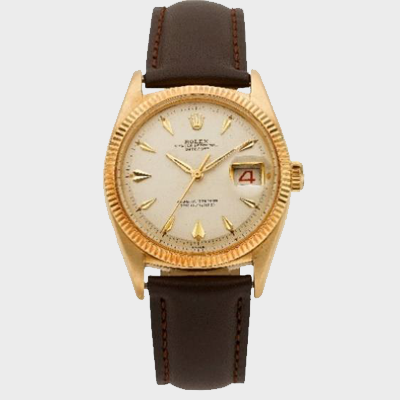
Since 1934
more than 200,000 watches had been undergone the official Swiss chronometer tests, and the power reserve indicator became increasingly popular. The first prototypes of wristwatches with electrodynamically driven balance wheels were presented (Elgin and Lip). New wristwatches included the Omega "Constellation" and the Tissot "Navigator" with world time zones and automatic movements. Rolex watches were worn by Edmund Hillary of New Zealand and Sherpa Tenzing Norgay of Nepal during the 4 successful first ascent of Mount Everest. Launch of the Jaeger-LeCoultre "Futurematic" model with power reserve indicator and no winding crown. US patent granted for the Hamilton movement with electric balance oscillator. Universal Genève's "Polerouter" became the official pilot's watch.
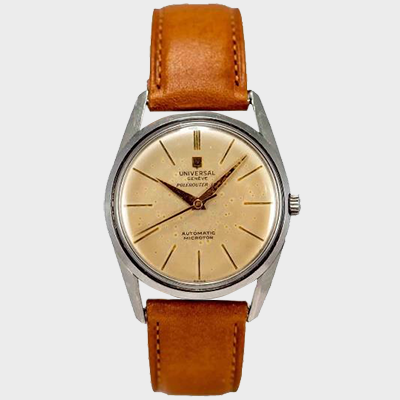
The second as a unit of time is defined as Yms692s.9747 of a solar year, starting at 12:00 on 1 January 190. Creation of the Omega Speedmaster chronograph. Cavers descend to 1122m wearing Blancpain Fifty Fathoms watches. Gruen presents the "Super G" with jumping hours 1-12 and 13-24; mass production of the battery-powered Ébauche SA calibre L 4750. Launch of the thinnest self-winding microrotor calibre (Piaget 12P, 2.3 mm thick); Mido introduces the "Aquadura" waterproofing system; Nathan Horwitt's dial is added to the collection of The Museum of Modern Art, New York, and Movado acquires this dial design, thus creating the "Museum" collection.
The Olympic Summer Games in Rome (timekeeping by Omega) are the first to officially recognise results recorded electrically and photographically; Omega introduces assembly lines for watches; Patek Philippe produces the first quartz marine chronometer - a fully transistorised clock and the smallest quartz clock in the world at the time. Launch of the Bulova "Accutron" with a tuning fork movement and an accuracy of one minute per month;
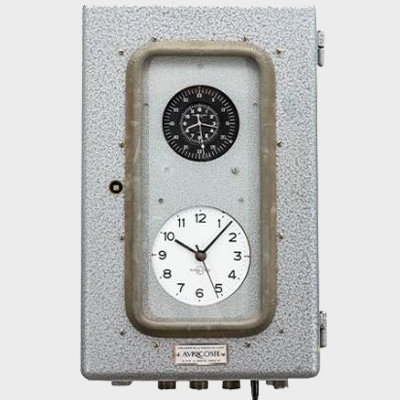
The first quartz marine chronometer
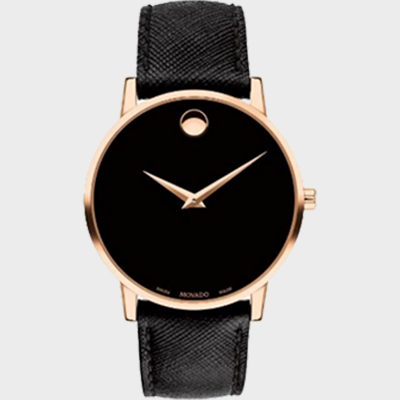
Designed by Nathan Horwitt